
In the retail sector, digitalization is changing consumer shopping habits while also reshaping businesses' store management, pricing, and product information processes. Consumers research products online, examine them in physical stores, and complete purchases through various channels. In this process, the consistent, up-to-date, and interoperable operation of all channels has become a fundamental requirement of omnichannel retailing.
However, managing online sales channels and physical stores within the same operational structure presents various challenges, particularly in terms of price updates, campaign implementation, and the accuracy of product information.
Electronic Shelf Labels (ESLs) contribute to the integration of omnichannel retail operations by enabling the management of price and product information in physical stores through digital systems.
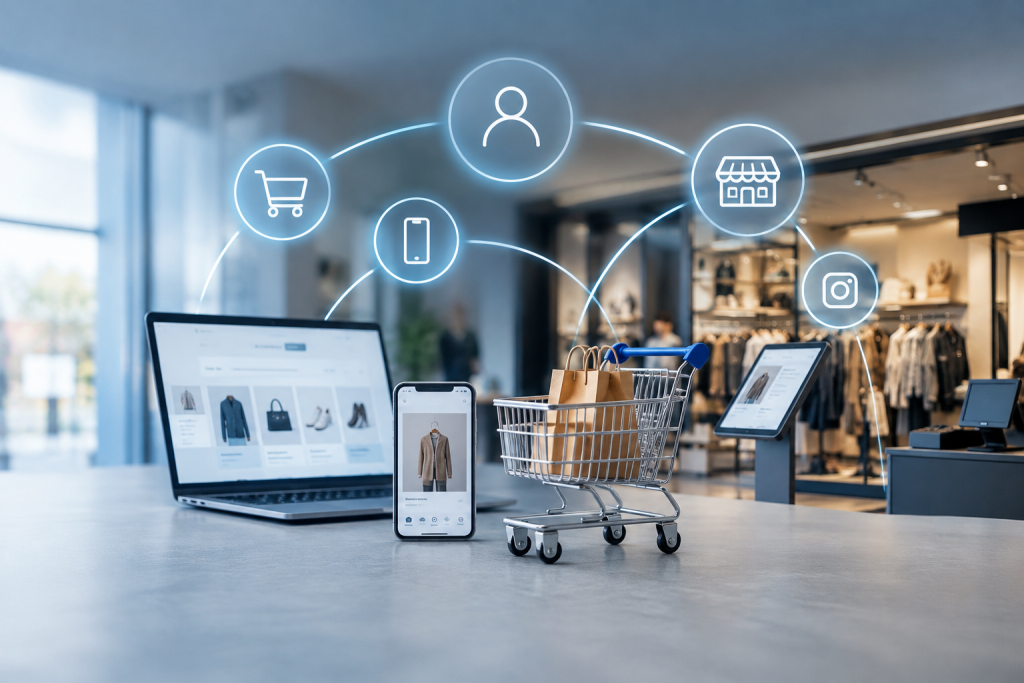
Omnichannel retailing refers to the management of physical stores, e-commerce sites, mobile applications, and other sales channels to provide an integrated customer experience. The goal of this approach is to ensure that customers can access product information and seamlessly complete their shopping process, regardless of which channel they use.
For example, a customer can browse a product they want to buy on an e-commerce site, try it out in a physical store, and pick up their order from the store. Managing product prices, stock information, and campaign conditions correctly throughout this process affects both customer satisfaction and the operational efficiency of the business.
The omnichannel approach is more than just bringing sales channels together. It requires the data, technology, and operational processes behind these channels to work together seamlessly. Since physical stores are a vital part of this structure, the digitalization of in-store information management also plays a crucial role in an integrated retail strategy.
Retail businesses operating across multiple sales channels must manage pricing information and promotions accurately at different touchpoints. Failure to reflect an online price update on a physical store price, discrepancies between checkout and shelf prices, or the failure to update promotion information in a timely manner can all lead to operational problems.
Such discrepancies can erode customer trust, increase employee workloads, and complicate price control processes.
Electronic shelf labels enable more controlled management of store shelf price updates through centralized systems. With the right integration infrastructure, price changes can be digitally communicated to the relevant stores, reducing the workload associated with manual label changes.
However, applying the same price across all channels is not always mandatory in omnichannel retailing. Businesses can establish different pricing strategies for store and online channels. The important thing is that the price offered across each channel is accurate, up-to-date, and compliant with established regulations.
In retail businesses managing numerous products and stores, price updates represent a significant operational burden, especially during peak campaign periods. Preparing and replacing paper labels individually is both time-consuming and prone to implementation errors.
Electronic shelf labels enable the management of prices and product information through a centralized system. Thanks to system integrations, defined changes can be digitally transferred to labels in stores. This speeds up price update processes and facilitates the coordination of applications across different stores.
In an omnichannel structure, product information should be presented accurately not only on e-commerce websites or mobile applications, but also in physical stores. Consistent management of data such as product name, price, and relevant campaign information across different channels supports the integrity of the customer experience.
Electronic shelf labels enable the linking of information from physical stores with digital systems. This allows store shelves to become part of a centralized product and price management system.
The key point here is to understand that electronic shelf labels alone do not integrate all channels. Real-time or automated information transfer depends on price management software, data sources, and integrations with POS, ERP, or e-commerce systems.
One of the repetitive tasks that consumes the time of employees in retail businesses is the preparation, printing, and replacement of shelf labels. As the number of products increases or campaigns become more frequent, managing these processes requires more coordination.
Electronic shelf labels reduce manual label changes, allowing employees to dedicate their time to customer support, product arrangement, and other in-store operations.
Omnichannel customers expect to access accurate product information at different stages of their shopping journey. Outdated pricing or product information in physical stores can create a disconnect between online information and the in-store experience.
Electronic shelf labels help reduce such inconsistencies by enabling faster updating of information on shelves. When supported by technologies like QR codes, they can also make it easier for customers to access product details or online product pages.
Thus, instead of being a standalone channel from the digital shopping experience, the physical store functions as part of the customer's integrated shopping journey.
The benefits of electronic shelf labels vary depending on the size of the business, product variety, frequency of price changes, and existing technological infrastructure.
Electronic shelf labeling systems may be a more worthwhile investment, especially for businesses with the following characteristics:
– Retail chains that manage a large number of products and SKUs
– Businesses with multiple physical stores
– Brands that frequently run campaigns and change prices
– Retailers who manage both online and physical sales channels
– Businesses aiming to reduce manual workload in store operations
For businesses with fewer product options, those that rarely change their prices, or those that operate through a single sales channel, the return on investment should be evaluated separately.
Therefore, the decision to switch to electronic shelf labels should be made not only from a technological innovation perspective, but also in line with current operational needs and long-term efficiency goals.
For electronic shelf labels to provide the expected benefits, the system needs to be compatible with the existing retail infrastructure.
Data source and integration: The system from which product and price information will be retrieved must be determined; and the data flow between POS, ERP, product information management, and e-commerce infrastructures should be evaluated.
Pricing rules: Prices, promotions, and exclusions applicable to both in-store and online channels must be clearly defined.
Update processes: A plan should be developed outlining the conditions under which price changes will be implemented, when they will be passed on, and to which stores.
Scalability: It is important that the solution is capable of working with new stores, product lines, and increasing operational needs.
Accuracy and verification: The accurate reflection of digitally transmitted prices on the shelves and their compatibility with the cash register systems should be checked regularly.
Considering these elements together supports the idea that electronic shelf labels should not remain merely an in-store hardware investment, but should contribute to integrated retail operations.
Omnichannel retailing requires retail businesses to manage their sales channels within an integrated structure. In this structure, the digital transformation of physical stores plays a crucial role in terms of price consistency, product information management, campaign implementation, and operational efficiency.
Electronic shelf labels strengthen the connection between physical stores and digital infrastructures by enabling the updating of information on store shelves through centralized systems. With proper integration and process management, they can contribute to faster price updates, reduce manual workload, and create a more consistent customer experience.