Competition in the retail sector is intensifying every year. In the 2026 retail dynamics, profitability is no longer measured solely by sales volume; it is also measured by operational efficiency, speed, and error rates. While paper labels may still seem like an "economical and traditional" solution for many stores, hidden costs lead to significant losses in the operating budget.
So, is continuing to use paper labels really a cost-saving measure, or a long-term loss? Let's take a detailed look at the advantages offered by Electronic Shelf Label (ESL) systems.
In paper labeling systems, each price change involves the processes of design, printing, cutting, and individual placement on shelves. Weekly price updates, especially in stores with 5,000 or more product varieties, consume a significant amount of staff time.
During this process, employees change labels instead of attending to customers. Shelf arrangements are disrupted, promotions are delayed, and sales opportunities are missed.
Hidden cost: If your staff are changing labels instead of making sales, there's an invisible loss of revenue.
ESL advantage: Electronic Shelf Label In this system, prices are updated centrally, with a single click, in seconds. Changes can be made simultaneously in all stores. This allows employees to focus on their primary task: improving the customer experience.
One of the most common problems in manual systems is the discrepancy between the shelf price and the checkout price. Forgotten discount tags or incorrectly labeled prices for products can lead to tension with customers at the checkout.
According to the legislation in force in Türkiye, if the shelf price and the checkout price differ, the price that is more favorable to the customer is applied. This directly means a loss of revenue.
However, the real risk is not financial, but reputational. A customer who is disappointed at the checkout often won't shop there again. Today, customer experience is fundamental to brand loyalty.
ESL solution: Electronic labels integrate with ERP and inventory systems. Prices are automatically synchronized, eliminating the margin of error. This ensures a reliable and transparent shopping environment.
In modern retail, prices are no longer fixed. Competitor campaigns, stock levels, and demand intensity can affect prices instantly. Updating at this speed with paper labels is nearly impossible.
You can start instant discounts on products nearing their expiration date.
You can run "Happy Hour" promotions at specific times of the day.
You can implement dynamic pricing based on demand.
This flexibility is one of the most powerful ways to increase profitability.
Paper, toner, and printing processes are both costly and environmentally harmful. Continuous label printing results in significant paper consumption.
Electronic shelf labels operate with low-energy E-Ink screen technology. Thanks to their long battery life, they provide years of use.
This not only offers a cost advantage but also creates an environmentally friendly brand image. By 2026, sustainability has become a key criterion directly influencing consumer preferences.
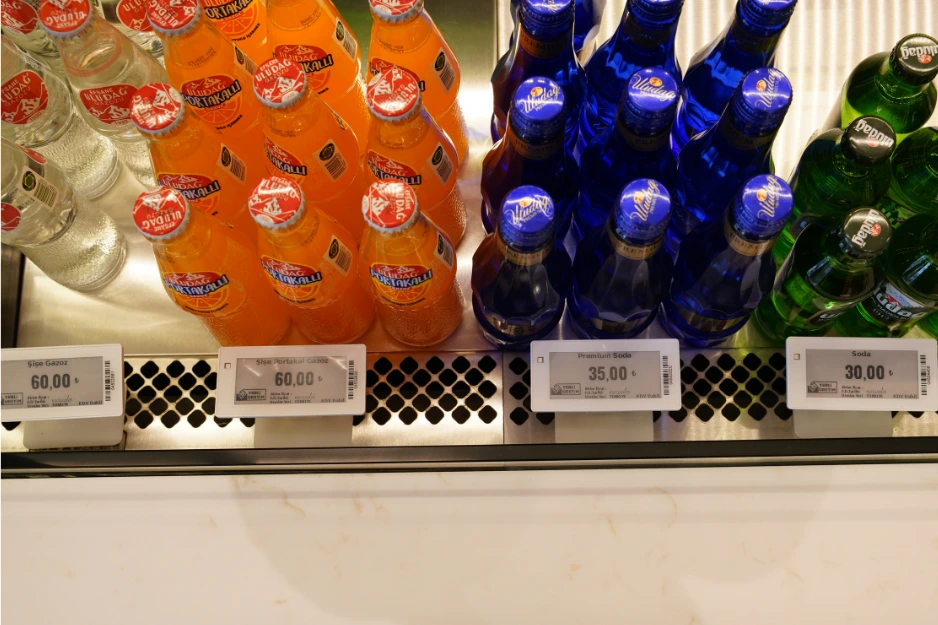
Paper labels only show the price. However, ESL systems, thanks to QR code integration, provide access to details such as product reviews, technical information, and stock availability.
This digital experience:
For many businesses, the most critical question is: How long does it take for an investment in electronic shelf labels to pay for itself?
When you add up the costs of paper, toner, printing equipment, and labor on an annual basis, the picture is astonishing. Industry analyses show that ESL systems recoup their investment costs within 12–18 months thanks to the efficiency and savings they provide.
In the long run, these systems directly contribute to profitability.
Continuing with paper labels means experiencing small but consistent productivity losses every day. Electronic shelf label systems, on the other hand, transform your store into a faster, more accurate, and smarter sales area.
In retail, digital transformation is no longer a choice, but a necessity for a competitive advantage. If you want to increase operational efficiency, strengthen customer satisfaction, and ensure sustainable growth in your store, now is the time to switch to Electronic Shelf Labeling systems.
Go digital today to secure your place in the retail of the future.